Competence
29 April 2026
9 min.

Competence
14 May 2026
8 min.

Training teams in soft skills isn’t just about sharing information or checking a box in a professional development plan. We’re talking about deeply human skills — communication, collaboration, leadership, change management — that take practice, feedback, and time to develop.
That’s what makes the choice of training format so strategic.
Online training is appealing because of its flexibility. It lets learners move at their own pace, revisit specific content, and keep learning despite busy schedules. In-person training, on the other hand, offers something that’s hard to replace: the richness of human interaction, role-playing activities, immediate feedback, and collective engagement.
But do we really have to pick a side?
Pitting online training against in-person training often means asking the wrong question. The real challenge is to determine which format to use, when to use it, and for which learning objective.
This matters even more because human skills are central to the changing world of work. According to the World Economic Forum’s Future of Jobs Report 2025, analytical thinking, creativity, resilience, agility, leadership, curiosity, and lifelong learning are among the skills considered important today or expected to grow in importance by 2030.
In other words, soft skills are not just a “nice little extra.” They are essential to helping organizations adapt, collaborate, and move forward through uncertainty.
Soft skills aren’t learned the same way as a technical procedure, a software program, or a compliance rule.
Of course, there are concepts to understand, useful models to explore, and key reference points to remember. But knowing the steps of a feedback conversation doesn’t automatically mean we’ll be able to lead one with calm, clarity, and courage when tensions rise.
Human skills are behavioural, relational, and contextual. They develop through action, with practice, reflection, feedback, and repeated attempts.
This is true for psychological safety, professional influence, change management, and managerial courage. These skills require us to observe our automatic reactions, try out new ways of doing things, and anchor learning in our day-to-day work.
That’s why soft skills training is best approached as an ongoing experience, not a one-time event.
Develop the essential soft skills needed to grow and adapt in a constantly changing world of work

Online training has come a long way. When it’s well designed, it’s no longer about distractedly clicking “Next” while thinking about your next coffee. It can become a real driver for developing human skills in the workplace.
Its biggest advantage is flexibility. Learners can complete training at their own pace, revisit specific content, and access resources right when they need them. This flexibility is especially useful for hybrid, multi-site organizations, or for teams with busy schedules.
The digital format also makes it easier to reach multiple teams while ensuring a common foundation: the same concepts, the same vocabulary, and the same reference points. This makes it especially useful for raising awareness, introducing new concepts, or preparing learners before a more interactive activity.
And that may be where it becomes especially valuable: online training doesn’t have to do everything on its own. Before an in-person session, it can lay the groundwork. After the workshop, it can reinforce learning through reminders, practical exercises, challenges, or additional resources.
In short, online training helps extend learning beyond a single training moment.
Online training has major advantages. But it also has its limits, especially when it comes to human skills.
In asynchronous training, spontaneous interactions are less common. There are fewer informal conversations, fewer non-verbal cues, and fewer real-time reactions. And yet, soft skills rely heavily on these kinds of exchanges.
Online training can also make certain types of practice harder to contextualize. Every workplace has its own dynamics, tensions, and realities. Some questions are better explored in a group setting, with a facilitator who can add nuance, reframe the discussion, and support the reflection process.
Finally, to have a real impact, online training needs to be engaging. To develop skills like leadership, listening, or courage, it takes more than a video and a few questions. It takes exercises, moments for reflection, and concrete links to day-to-day work.
That’s why Boostalab’s online training includes built-in pauses, challenges, and learning consolidation activities.
Otherwise, the risk is that the training gets completed… without truly transforming behaviours.
Give your teams a hands-on, small-group workshop to develop their soft skills
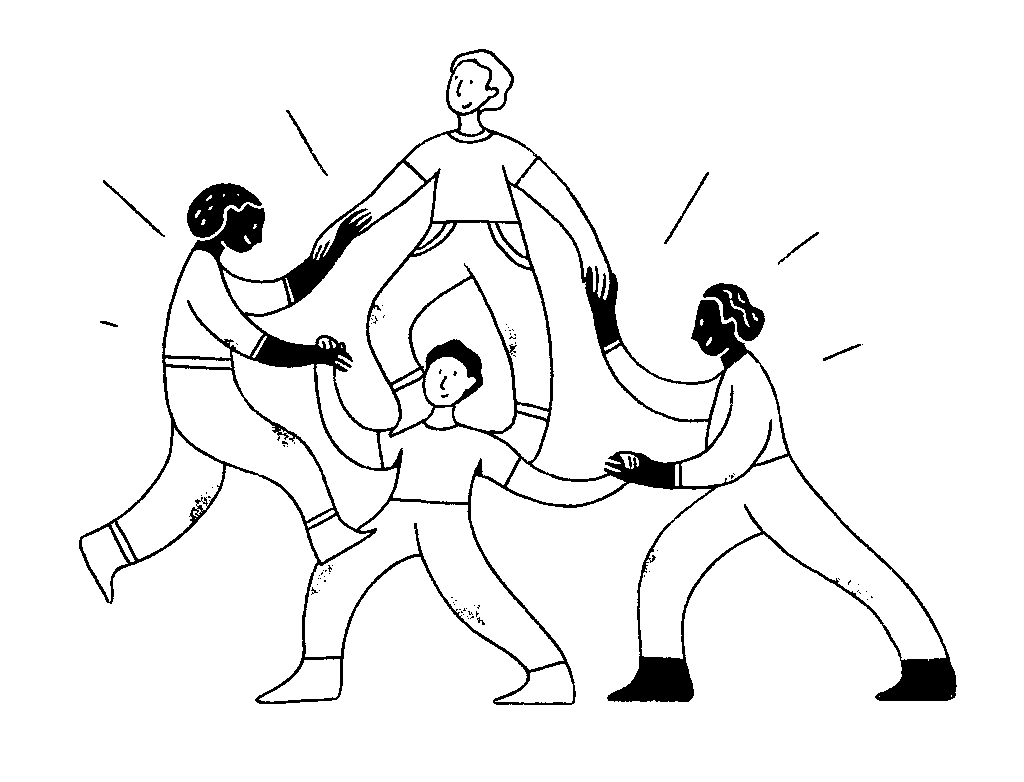
While online training offers flexibility, in-person training offers a quality of exchange that’s hard to replace, as long as it provides participants with a truly interactive setting.
When that’s the case, it creates a space where participants can react, ask questions, clarify and refine their thinking, and learn from one another. This shared presence is especially valuable when addressing sensitive topics such as unconscious bias, difficult conversations, managing psychosocial risks, or inclusive leadership.
In-person training also supports hands-on practice. Role-playing activities, case studies, small-group discussions, and simulations allow participants to try out an approach, a phrase, or a way of responding, then receive immediate feedback.
This is essential for soft skills. There’s often a gap between understanding what we should do and actually being able to do it in a real situation. And that gap gets smaller with practice.
In-person training then becomes more than a learning moment: it becomes a space for exchange, experimentation, and collective engagement.
Even when the experience is excellent, in-person training isn’t perfect.
It requires more organization: coordinating schedules, booking a room, bringing participants together, and freeing up time in calendars that are already packed. For hybrid, multi-site, or very busy teams, these constraints can become a major barrier.
In-person training can also lose some of its impact if it isn’t followed by opportunities to revisit and reinforce learning. A training session can be inspiring, but when day-to-day work picks back up — meetings, urgent requests, emails, competing priorities that start piling up — learning can start to fade. Without follow-up, reminders, or opportunities to practise, the impact decreases over time. That’s why practising the skills developed is an integral part of Boostalab’s in-person training, both during the time spent together as a group and after the workshops.
Finally, in-person training is less easily adapted to individual learning rhythms. The group moves forward together, which is valuable, but not everyone learns at exactly the same pace.
Give your teams a personalized training experience where they take centre stage in their own professional growth!

So the real question isn’t: online training or in-person training?
The real question is: how can we create a learning experience that uses the best of each format?
That’s where the hybrid approach becomes especially interesting. It combines the flexibility of digital learning with the depth of human interaction that comes with in-person training, while also supporting learning over time.
Before the training, a short online module can introduce key concepts and invite participants to reflect on a concrete situation.
During the in-person training, the group can focus on what is best experienced together: discussions, role-playing activities, feedback, sharing experiences, and making the learning their own.
After the training, online resources can help maintain momentum: reminders, practical exercises, application challenges, or downloadable tools.
This approach is especially relevant for soft skills because it better reflects the reality of behavioural change: understanding, practising, receiving feedback, applying, adjusting… and then starting again.
Each format has its strengths. The idea isn’t to choose one approach once and for all, but to match the format to the objective.
Training objective |
Recommended format |
|
|---|---|---|
| Share basic concepts | → | Online |
| Train a large number of people | → | Online or hybrid |
| Practice a difficult conversation | → | In-person |
| Create team alignment | → | In-person or hybrid |
| Develop a common vocabulary | → | Hybrid |
| Revisit and reinforce learning | → | Online |
| Support a culture change | → | Hybrid |
| Train managers over time | → | Hybrid |
This table clearly shows one thing: the formats are not in competition. They meet different needs.
Online training can be perfect for introducing a concept. An in-person workshop can be ideal for practice. Digital follow-up can help maintain momentum. And together, they can create a much more coherent learning experience.
Online training and in-person training each have their own strengths.
Digital learning makes access, flexibility, consistency, and follow-up over time easier. In-person training supports human interaction, practice, feedback, and collective engagement.
But when it comes to developing soft skills, the most effective choice isn’t always to decide between the two. Often, the strongest approach is to combine them thoughtfully.
Because human skills don’t develop all at once. They are built through practice, reflection, feedback, and opportunities to try again.
The real question then becomes: what learning experience will help people turn their knowledge into concrete behaviours?
And that’s where combining online learning, in-person training, and follow-up over time can make all the difference.
Have a project in mind? Let’s talk today and help your teams grow, together

FAQ — Online or in-person soft skills training
Soft skills training is designed to develop human and relational skills such as communication, leadership, collaboration, listening, psychological safety, change management, and managerial courage.
Unlike purely technical training, it does more than share knowledge. It helps participants observe their behaviours, practise new ways of doing things, and apply them in their day-to-day work.
Yes, as long as it is well designed.
Effective online training is not just about watching videos or clicking “Next.” It needs to include exercises, moments for reflection, role-playing activities, application challenges, and concrete links to day-to-day work.
It is especially useful for introducing concepts, making training accessible at scale, and supporting learning over time.
Online training offers a lot of flexibility. Learners can move at their own pace, revisit specific content, and complete training at the time that best fits their schedule.
It also makes it easier to reach hybrid, multi-site, or geographically dispersed teams. It helps create a common foundation: the same concepts, the same vocabulary, and the same reference points.
Online training can offer fewer spontaneous interactions, especially when it is asynchronous. There are fewer informal exchanges, fewer non-verbal cues, and less real-time feedback.
It can also be less suited to working through complex or sensitive situations, which are often better explored in a group setting with a facilitator.
In-person training supports human interaction, spontaneous discussion, role-playing activities, and immediate feedback.
It is especially useful for practising relational skills, addressing sensitive topics, and creating collective engagement. It also allows teams to develop a common vocabulary and reflect together on their challenges.
In-person training requires more organization. Schedules need to be coordinated, participants need to be brought together, a room needs to be booked, and travel may sometimes need to be planned.
It can also lose some of its impact if it lacks interactivity, or if it is not followed by reminders, exercises, or opportunities for practice. An inspiring training session is good. Training that becomes anchored in day-to-day work is even better.
There is no universal answer. It all depends on the learning objective, the topic, the number of participants, the organization’s context, and the desired impact.
Online training is very useful for raising awareness, introducing concepts, or supporting learning over time. In-person training is especially strong when it comes to practising, exchanging ideas, and mobilizing a team.
A hybrid approach makes it possible to combine the best of both formats.
For example, an online module can prepare participants before an in-person session. The workshop can then focus on discussions, role-playing activities, and feedback. Online resources can then help consolidate learning after the training.
This approach is especially relevant for soft skills because they develop over time, with practice and repetition.
For managers, a hybrid approach is often very relevant.
Online training can introduce key concepts and allow for initial individual reflection. In-person training can then provide a space to practise, discuss concrete situations, and receive feedback.
It is a good way to support the shift from understanding a concept to applying it in the reality of management.
To maximize impact, you need to think beyond the training moment itself.
Effective soft skills training should include preparation, practice, feedback, reminders, and opportunities to apply learning in day-to-day work. This continuity is what helps knowledge turn into concrete behaviours.

Blog
29 April 2026
9 min.

27 April 2026
6 min.

11 March 2026
7 min.
Nos ressources gratuites vous donneront un avant-goût de nos solutions et vous permettront de faire des premiers pas pour transformer votre organisation!
Pourquoi ça vaut la peine d’y réfléchir? Parce que la connaissance de son propre style et du style de l’autre permet d’être plus efficace dans ses relations interpersonnelles, à la maison comme au travail.
Alors, quel est votre style de communication?