Using generative AI at work
The Using generative AI in everyday work training helps employees and managers integrate artificial intelligence into their day-to-day work in practical, thoughtful, and responsible ways. At Boostalab, we offer an accessible approach to identifying the right use cases, writing better prompts, and using AI as a support tool—while keeping professional judgment at the centre.

What is generative AI at work?
Generative AI is a technology that can create text, summaries, ideas, images, or other content based on a request made by a person. Tools such as ChatGPT, Copilot, Claude, and Gemini are examples of generative AI.
In the workplace, generative AI can help with writing, summarizing, organizing information, preparing drafts, or exploring different lines of thinking. It can often speed up certain tasks and reduce the time spent on repetitive activities.
However, generative AI is not an infallible source. It can produce information that is inaccurate, incomplete, or poorly suited to the context. It does not understand your organization’s realities, does not take responsibility, and does not make decisions for you.
Using AI effectively therefore relies on three things: a well-formulated prompt, human validation of the output, and professional judgment at every step. The goal is not to replace human expertise, but to enhance it.
Generative AI is first and foremost a tool. Its value depends on how it is used, framed, and supervised.

Why invest in generative AI training for the workplace?
Investing in generative AI training helps teams use artificial intelligence more effectively and responsibly. Without guidance, some people may hesitate to use it, while others adopt it quickly without always understanding its limitations.
Training helps build a shared understanding. Participants learn to identify the tasks where AI can add real value, write better prompts, and validate outputs before using them.
The return on investment is concrete. Teams save time on certain tasks, improve the quality of their prompts, and use AI with greater confidence and discernment. It also helps reduce risks related to errors, bias, or overreliance on the tool.
As artificial intelligence becomes increasingly integrated into the workplace, investing in this skill helps organizations develop AI practices that are more productive, more responsible, and better adapted to their realities.
In Quebec, this training may also qualify as an eligible expense under the 1% Training Law. Some companies may also be able to access financial assistance through Services Québec.

Who is this training for?
This generative AI training for the workplace is designed for employees and managers who want to integrate artificial intelligence into their day-to-day work in practical and responsible ways. It is especially relevant for managers, HR professionals, communications teams, advisors, analysts, and anyone who produces, summarizes, or shares information.
It is also a good fit for people who are new to AI and want to know where to start. No technical prerequisites are required.
This training is ideal for organizations that want to encourage thoughtful AI adoption, develop their teams’ autonomy, and establish good practices as soon as teams start using it.
Our training solutions to help teams use generative AI responsibly
Equip your teams to use generative AI effectively with a solution designed to drive real action. At the same time, make it easy to balance performance and well-being — the Boostalab way.

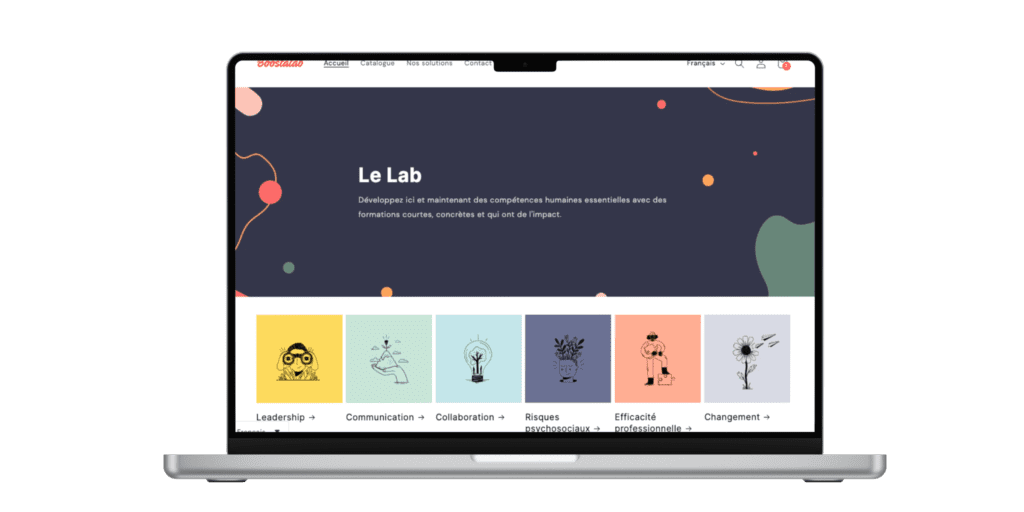
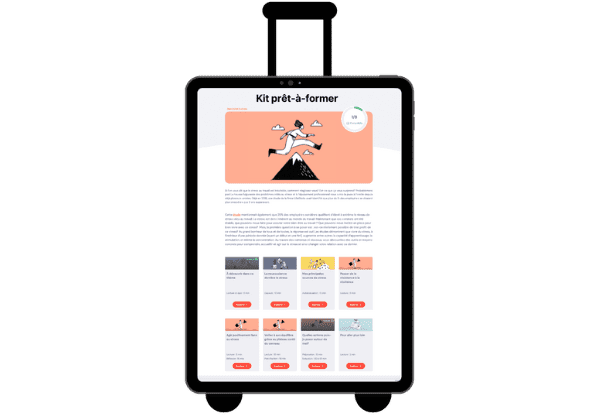
Explore our catalogue of AI training courses on Le Lab
AI collection
Why learn to use generative AI at work?
Generative AI can help save time and simplify certain tasks. But you still need to know when to use it, how to guide it, and how to validate what it produces. Developing these habits helps you get more useful results while staying in control of decisions and deliverables. The goal is not to become an artificial intelligence expert. The goal is to learn how to use AI with confidence, discernment, and responsibility in your own work context.
Training outcomes

Quickly identify the tasks where AI can add real value to your day-to-day work.

Get more relevant responses with clearer, better-structured prompts.

Use AI with confidence without losing your professional judgment by validating results before using them.

Leave the training with a concrete AI mini-experiment that you can apply in your own work context right away.
FAQ — Using generative AI at work
Why take generative AI training for the workplace?
This training helps participants integrate AI into their day-to-day work in practical and responsible ways. It helps them identify the right use cases, write better prompts, and validate results before using them.
This training helps participants integrate AI into their day-to-day work in practical and responsible ways. It helps them identify the right use cases, write better prompts, and validate results before using them.
Who is this generative AI training for?
It is designed for employees and managers who want to use AI in their work, regardless of their level of experience. No technical prerequisites are required.
It is designed for employees and managers who want to use AI in their work, regardless of their level of experience. No technical prerequisites are required.
Do you need to already use ChatGPT, Copilot, Claude, or Gemini to take this training?
No. This training is designed both for people who are new to AI and for those who want to better structure their practices.
No. This training is designed both for people who are new to AI and for those who want to better structure their practices.
Which tools are covered in the training?
The training uses examples from tools such as ChatGPT, Copilot, Claude, and Gemini. However, the goal is not to learn one specific platform, but to develop habits that can be transferred from one tool to another.
The training uses examples from tools such as ChatGPT, Copilot, Claude, and Gemini. However, the goal is not to learn one specific platform, but to develop habits that can be transferred from one tool to another.
What types of tasks can be assigned to AI?
AI can be useful for summarizing, rephrasing, organizing information, generating ideas, or preparing a first draft. However, certain tasks that are more sensitive, complex, or strategic require greater caution and human supervision.
AI can be useful for summarizing, rephrasing, organizing information, generating ideas, or preparing a first draft. However, certain tasks that are more sensitive, complex, or strategic require greater caution and human supervision.
How can you make sure AI responses are reliable?
Any response generated by AI must always be validated before being used. The training helps participants develop simple habits to verify the relevance, accuracy, and fit of the results within the context.
Any response generated by AI must always be validated before being used. The training helps participants develop simple habits to verify the relevance, accuracy, and fit of the results within the context.
What results can participants expect after the training?
Participants leave with concrete tools to better use AI in their work, as well as an AI mini-experiment adapted to their work context. They gain confidence, efficiency, and autonomy.
Participants leave with concrete tools to better use AI in their work, as well as an AI mini-experiment adapted to their work context. They gain confidence, efficiency, and autonomy.
Are your trainings eligible under the 1% Training Law?
Yes, they may qualify as eligible expenses under the 1% Training Law, depending on your organization’s situation. Some companies may also be able to access financial assistance through Services Québec.
Yes, they may qualify as eligible expenses under the 1% Training Law, depending on your organization’s situation. Some companies may also be able to access financial assistance through Services Québec.
What is the difference between this training and technical training on ChatGPT, Copilot, Claude, or Gemini?
This training is not designed to help participants master every feature of a tool. Instead, it focuses on developing the right habits to use AI in practical, cautious, and responsible ways in a professional context.
This training is not designed to help participants master every feature of a tool. Instead, it focuses on developing the right habits to use AI in practical, cautious, and responsible ways in a professional context.
Can AI replace certain human tasks?
AI can support certain tasks, but it does not replace human judgment, responsibility, or expertise. This training helps participants determine what can be assigned to AI and what should remain under human supervision.
AI can support certain tasks, but it does not replace human judgment, responsibility, or expertise. This training helps participants determine what can be assigned to AI and what should remain under human supervision.