Efficiency
27 July 2026
11 min.

Skill development
2 October 2026
7 min.

Artificial intelligence is already transforming a wide range of tasks: writing, summarizing, analyzing data, generating ideas, and supporting decision-making. As AI becomes part of everyday work, one question is becoming increasingly important: which skills become more valuable when AI can take on part of the work?
The answer isn’t just about technical skills. Knowing how to use AI effectively still matters, but succeeding in the age of AI also depends on distinctly human abilities: exercising judgment, learning, adapting, and deciding what we can — and can’t — entrust to technology.
That’s one of the key findings from the Compétences humaines 2030 report, based on a Boostalab study of more than 660 professionals in Quebec. Four skills stand out in particular as organizations adapt to AI: human-AI collaboration, critical thinking, continuous learning, and tolerance for ambiguity.
AI in the workplace is often discussed in terms of tools, automation, and productivity gains. These all matter, but they’re only part of the picture.
When AI can generate an answer in seconds, value no longer comes only from being able to produce something—it also comes from being able to evaluate it. A recommendation needs to be assessed for relevance, a summary needs to be checked, and a proposed solution needs to be considered in context before it can be used.
The study’s findings point in the same direction. Among the AI-related changes respondents expect to see, several themes stand out: setting guidelines for AI use, managing risks, and a growing need for critical thinking and sound judgment.
Soft skills and AI are becoming increasingly intertwined: the more capable the tools become, the more strategically important human judgment becomes.
Create a clear framework to foster trust, shared responsibility, and quality
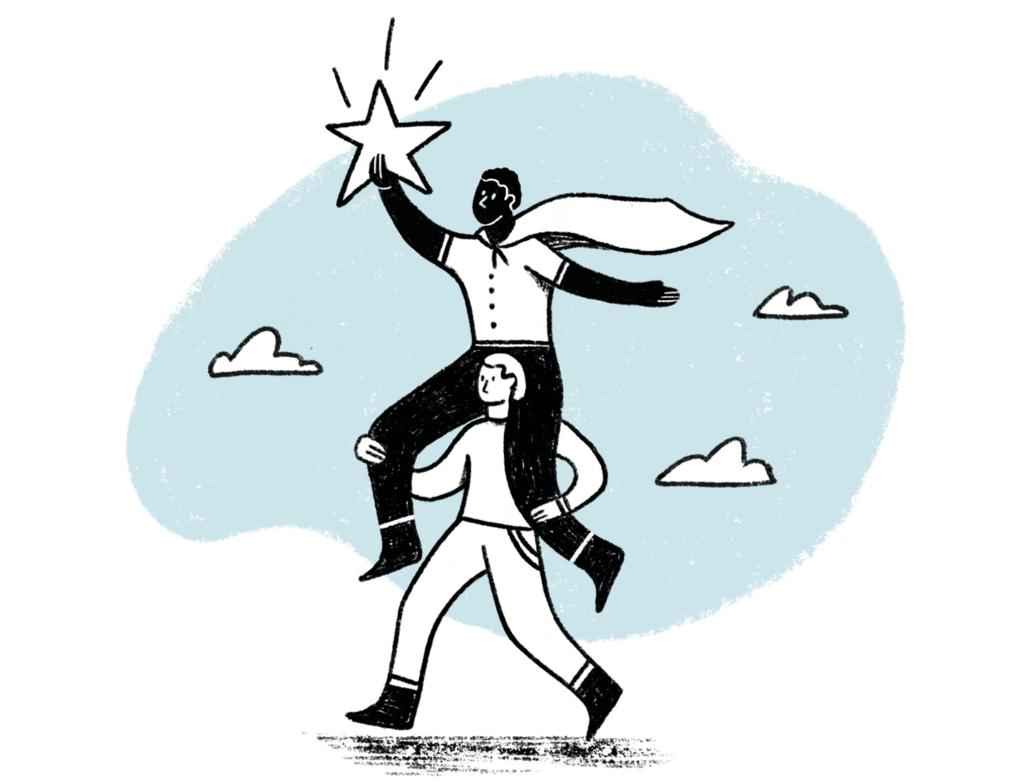
Collaborating with AI isn’t just about knowing how to write a good prompt. It also means deciding what can be delegated to technology, what needs to be reviewed, and what should remain a human responsibility.
In the Compétences humaines 2030 report, human-AI collaboration ranks third among the skills to prioritize for non-managers.
This skill is also closely connected to collaboration between people. AI can speed up certain exchanges, produce summaries, and help people prepare their work, but it can also change how ideas circulate, how decisions are made, and how expertise is shared within a team.
So the challenge isn’t only to divide work more effectively between people and AI. It’s also about preserving what makes human collaboration so valuable: dialogue, the exchange and challenge of different perspectives, collective judgment, and trust.
Generative AI makes it easier to access answers, summaries, and analyses. That shifts the challenge: getting an answer is no longer enough — you need to know how to assess it.
Is it accurate? Nuanced? Appropriate for the context? What assumptions does it rely on? What still needs to be verified?
That’s where critical thinking becomes especially valuable. It helps us step back, identify the limitations of a result, compare different interpretations, and avoid mistaking a convincing answer for a reliable one.
This skill becomes particularly important when AI is used to support decisions or recommendations. The report also highlights a gap between the importance placed on critical thinking and the perceived level of investment in developing it among non-managers.
The easier answers become to produce, the more strategically important our ability to question, validate, and interpret them becomes.
Develop your critical thinking, analyze AI, and make informed decisions

AI tools are evolving quickly. Features change, new uses emerge, and some practices can become outdated in a short period of time. In this context, relying on a fixed set of knowledge and skills is no longer enough.
Continuous learning means being able to learn, experiment, adjust our practices, and sometimes unlearn ways of working that no longer serve us. This is closely tied to upskilling and reskilling strategies: building skills to grow within a current role or developing new ones as the nature of work changes.
So the question is no longer just, “What do we need to learn now?” It’s also, “Can we keep learning as our work changes?”
This ability doesn’t rest on individuals alone. It also requires a genuine learning culture, where learning, experimentation, and knowledge-sharing are given a real place in day-to-day work.
Bringing AI into the workplace creates plenty of grey areas. Tools evolve quickly, use cases become clearer through experimentation, and some practices need to be adjusted before they’ve fully taken shape.
Tolerance for ambiguity helps people keep thinking, making decisions, and taking action even when the way forward isn’t completely clear. It doesn’t mean passively accepting uncertainty. It means moving ahead with sound judgment while staying ready to adapt your approach.
This ability is closely connected to digital agility: understanding tools and technological change well enough to adapt the way you work without losing sight of your goals.
It also plays a key role during periods of transformation. Effective change management doesn’t aim to eliminate all uncertainty. Instead, it helps teams move forward despite it, test new ways of working, and adjust their practices as the situation evolves.
These four skills become even more powerful when they’re used together. Imagine a team that starts using generative AI to prepare recommendations.
Together, these skills make it possible to use AI without losing sight of professional judgment. This may be one of the biggest challenges when it comes to the skills needed to work in the age of AI: it’s not just about using tools more effectively, but also about protecting the quality of the work that happens around them.
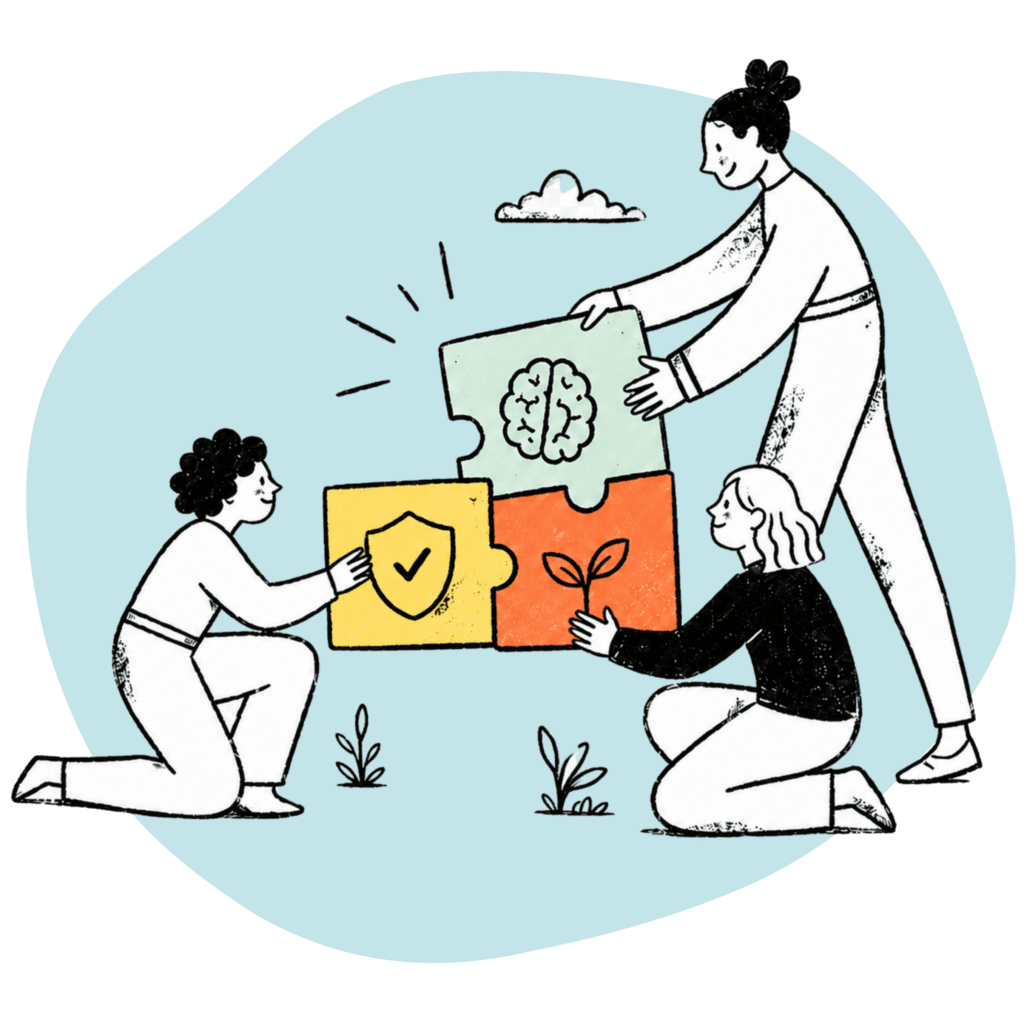
Recognizing the importance of these skills is one thing. Actually developing them is another.
Soft skills are built mainly through practice, feedback, and opportunities to apply them in real situations. An effective strategy should therefore start with the work itself: Which AI initiatives are changing the way people work? What new decisions do teams need to make? Where is human judgment becoming especially important?
From there, an organization can:
This is also one of the approaches proposed in Compétences humaines 2030: focus on a limited number of critical skills, connect them to real workplace situations, and support their application on the job.
Most importantly, this approach helps avoid treating workplace AI training and human skills development as two separate efforts. They’re more effective when they’re designed together.
AI will continue to evolve. Tools will change, use cases will become clearer, and some tasks will be transformed significantly. But the value created will still depend largely on the quality of the human skills people bring to the use of these technologies.
Exercising judgment, learning, adapting, and collaborating with AI are essential. But we also need to preserve what human collaboration makes possible: challenging different perspectives, sharing expertise, building trust, and making better decisions together.
Human skills development shouldn’t be treated as a separate initiative running alongside AI projects. It should be built into those projects from the start.
The question then becomes: Which human skills do we need to strengthen so we can work better with AI without weakening our ability to work well with one another?
For organizations, that’s an important part of the work to be done right now.
Let’s talk about your training needs in terms of AI usage in the workplace
Frequently asked questions about human skills and AI
The skills to prioritize will vary depending on the role and context. Among those that are especially relevant to AI-driven transformation are human-AI collaboration, critical thinking, continuous learning, and tolerance for ambiguity.
Because AI can quickly generate plausible answers without guaranteeing that they’re accurate, complete, or appropriate for the context. Critical thinking helps people validate, contextualize, and question AI-generated results before using them.
Upskilling means developing new skills to grow within your current role. Reskilling means acquiring the skills needed to take on new responsibilities or move into a different role.
No. As AI takes on certain tasks, people increasingly need to exercise judgment, learn, adapt, and decide what role technology should play. Human and technical skills are therefore becoming more complementary.

Blog
27 July 2026
11 min.
14 May 2026
8 min.

29 April 2026
9 min.
Nos ressources gratuites vous donneront un avant-goût de nos solutions et vous permettront de faire des premiers pas pour transformer votre organisation!
Pourquoi ça vaut la peine d’y réfléchir? Parce que la connaissance de son propre style et du style de l’autre permet d’être plus efficace dans ses relations interpersonnelles, à la maison comme au travail.
Alors, quel est votre style de communication?