Drive collaboration in the age of AI
The Driving collaboration in the age of AI training helps teams work better together in a context where artificial intelligence is becoming increasingly present. At Boostalab, we offer a practical approach to clarifying uses, reducing friction, and strengthening trust, quality, and accountability in human-AI collaboration.
What does collaborating in the age of AI mean?
Collaborating in the age of AI refers to the way teams work together in a context where artificial intelligence is integrated into day-to-day tasks. It involves coordinating human work and AI-generated contributions, while maintaining quality, consistency, and accountability.
AI does not create new collaboration challenges. It amplifies the ones that already exist. Lack of clarity around roles. Unclear validation. Uneven distribution of work. Implicit expectations. These grey areas can become more visible when AI is used individually, without shared guidelines.
Without a shared framework, the use of AI can lead to inconsistent quality, invisible work, a loss of consistency, and poorly defined accountability. One person may use AI to speed up a task, while another has to review, correct, or complete the work without this being made explicit. This can weaken trust within the team.
Collaboration in the age of AI is therefore based on clear team norms. Who uses AI? For which tasks? With what level of validation? Who is responsible for the final result? These questions need to be made explicit to avoid misunderstandings.
It also relies on shared accountability. AI can support the work. It does not replace coordination, communication, or collective judgment. Teams need to agree on common practices to maintain a consistent level of quality.
Finally, this type of collaboration means being transparent about how AI is used. Saying when it is used. Clarifying what was generated, adjusted, or validated. This helps strengthen transparency, better distribute efforts, and support healthier, more effective collaboration.
Why invest in training on collaboration in the age of AI?
Investing in training on collaboration in the age of AI helps reduce the friction that can come from using artificial intelligence without clear guidelines. Without shared reference points, teams may experience inconsistent quality, unclear responsibilities, and a loss of trust.
AI can speed up work. It can also create invisible work. One person generates content. Another validates, corrects, or completes it without that effort being recognized. These imbalances can affect collaboration, motivation, and the consistency of deliverables.
Training teams helps make these issues visible and turn them into clear practices. Defining who does what. Clarifying the expected level of validation. Setting simple rules around the use of AI. These reference points make coordination easier and reduce pain points.
The return on investment is tangible. Fewer misunderstandings. Less rework. Better-quality deliverables. Smoother collaboration. Stronger trust between team members.
In a context where AI is being quickly integrated into work, investing in this training helps keep teams aligned, accountable, and effective. It is also a way to protect teams from an increased workload and prevent the acceleration enabled by AI from becoming a constant source of pressure.
In Québec, this training may also fall under eligible expenses covered by the 1% Law. Some companies may also have access to financial assistance through Services Québec.

Who is this training for?
This training on collaboration in the age of AI is designed for teams that are already using artificial intelligence — or are starting to integrate it — and want to avoid grey areas in the way they work together. It is especially relevant for managers, who need to clarify expectations, distribute responsibilities, and maintain the quality of deliverables.
It is also designed for project teams, HR professionals, and organizational development specialists, who support transformations and help strengthen collaboration dynamics. Hybrid and remote teams will also find practical reference points to better coordinate work when AI becomes part of their day-to-day tools.
This training is useful for any organization that wants to strengthen consistency, transparency, and trust within its teams. It does not require technical expertise: above all, it aims to establish clear ground rules and develop shared practices that reflect the realities of day-to-day work.
Training solutions to drive collaboration in the age of AI
Help your teams drive collaboration in the age of AI with a training solution that drives real action. This is how you can reconcile performance and wellbeing in a simple way.

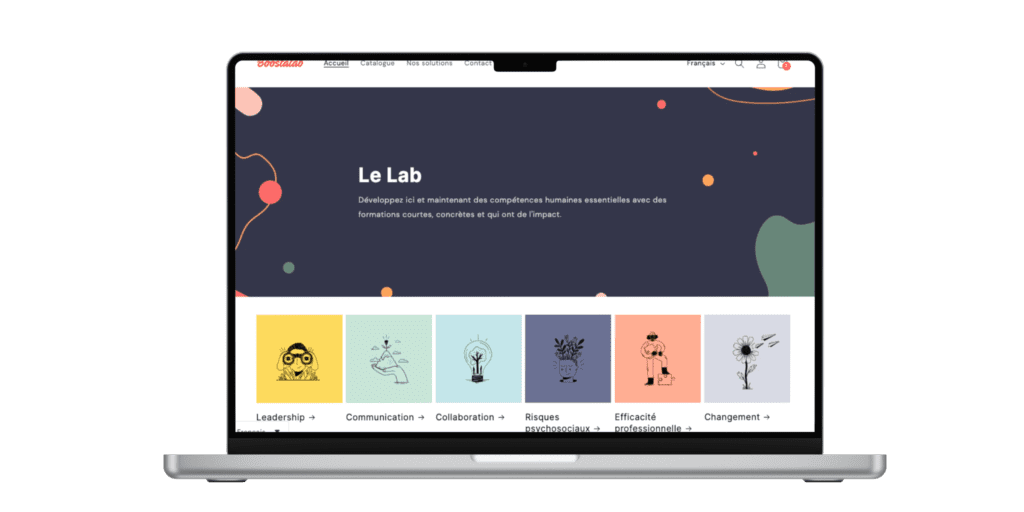
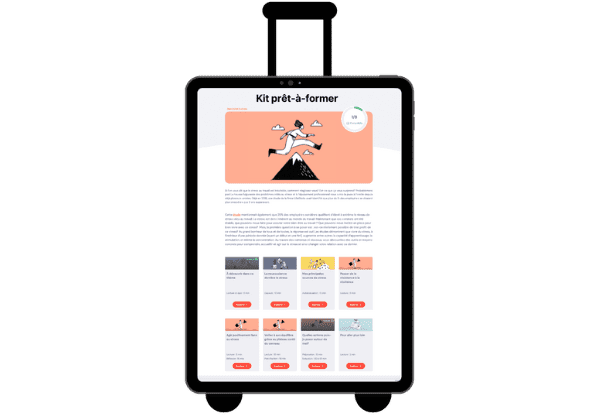
Explore our catalogue of AI training courses on Le Lab
AI collection
Why learn to better collaborate in the age of AI?
AI is not just an issue of individual use. It is changing the way teams work together. Without shared guidelines, it can create ambiguity, invisible work, and quality gaps. Learning to collaborate better when using AI means clarifying who does what, making the use of AI visible, and protecting trust within the team.
The goal is not to set rules for the tool itself. The goal is to set rules for collaboration when using the tool.
Training outcomes

Reduce friction within the team by clarifying roles, responsibilities, and expectations related to the use of AI

Improve the quality and consistency of deliverables with simple rules around validation and the use of AI

Make invisible work… visible by making the use of AI explicit, along with the efforts involved in reviewing, adjusting, and validating work

Strengthen trust and shared accountability by establishing a clear team charter tailored to your reality
FAQ — Collaboration and AI
Why take training on collaborating in the age of AI?
This training helps reduce friction related to the use of AI within teams. It helps clarify roles, expectations, and responsibilities to improve the quality of work and collaboration.
This training helps reduce friction related to the use of AI within teams. It helps clarify roles, expectations, and responsibilities to improve the quality of work and collaboration.
Who is this training on collaboration and AI for?
It is designed for teams, managers, and professionals who use AI in their work and want to better structure the way they collaborate. It is especially useful in hybrid work settings or collaborative project environments.
It is designed for teams, managers, and professionals who use AI in their work and want to better structure the way they collaborate. It is especially useful in hybrid work settings or collaborative project environments.
Do you need to already be using AI to take this training?
No. This training is suitable for teams that are just getting started with AI, as well as those that are already using it but are experiencing pain points or grey areas in the way they collaborate.
No. This training is suitable for teams that are just getting started with AI, as well as those that are already using it but are experiencing pain points or grey areas in the way they collaborate.
What types of problems does this training help address?
It helps address issues such as quality gaps, unclear responsibilities, invisible work, implicit expectations, and a loss of consistency in deliverables related to the use of AI.
It helps address issues such as quality gaps, unclear responsibilities, invisible work, implicit expectations, and a loss of consistency in deliverables related to the use of AI.
What is an AI team charter?
An AI team charter is a set of simple, shared rules that guide how AI is used within a team. It clarifies who uses AI, for which tasks, with what level of validation, and with what responsibilities.
An AI team charter is a set of simple, shared rules that guide how AI is used within a team. It clarifies who uses AI, for which tasks, with what level of validation, and with what responsibilities.
How does this training improve collaboration?
It helps make the use of AI visible, clarify practices, and establish shared norms. This makes coordination easier, reduces misunderstandings, and strengthens trust between team members.
It helps make the use of AI visible, clarify practices, and establish shared norms. This makes coordination easier, reduces misunderstandings, and strengthens trust between team members.
What results can participants expect after the training?
Teams leave with clear rules, shared practices, and better alignment. Collaboration becomes smoother, more transparent, and more consistent.
Teams leave with clear rules, shared practices, and better alignment. Collaboration becomes smoother, more transparent, and more consistent.
Are your trainings eligible under the 1% Law?
Yes, they may fall under eligible expenses covered by the 1% Law, depending on your organization’s situation. Some companies may also have access to financial assistance through Services Québec.
Yes, they may fall under eligible expenses covered by the 1% Law, depending on your organization’s situation. Some companies may also have access to financial assistance through Services Québec.
How is this training different from AI training?
This training is not about the technical use of AI. It focuses on how to collaborate with AI as a team. It helps structure practices, rather than teach a specific tool.
This training is not about the technical use of AI. It focuses on how to collaborate with AI as a team. It helps structure practices, rather than teach a specific tool.
Does the whole team need to be involved for the training to be effective?
Ideally, yes. Since the training is designed to create shared reference points, its impact is stronger when several members of the same team take part and can develop their practices together.
Ideally, yes. Since the training is designed to create shared reference points, its impact is stronger when several members of the same team take part and can develop their practices together.