
Leadership
23 September 2026
8 min.

Leadership
3 September 2026
9 min.

Two people on your team are given a new assignment. One wants to know exactly where to start. The other already knows the terrain and wants the freedom to move forward independently. Give them both the same level of guidance, and one may feel lost while the other feels micromanaged.
That’s where situational leadership comes in: adjusting your approach based on the needs of the person, the team, and the moment. Sometimes, people need clear direction. Sometimes, they need questions, encouragement, and feedback. And sometimes, the best thing a manager can do is step back and give them room to act.
Originally developed by Paul Hersey and Ken Blanchard, situational leadership is built around a simple idea: an approach that works well in one situation may be much less effective in another (1). To adapt leadership style effectively, managers need to consider both the task at hand and the development level of the person responsible for it.
The model looks at two key dimensions. The first is direction: clarifying the goal, the steps, the roles, and what success looks like. The second is support: listening, asking questions, encouraging, and providing feedback.
Current documentation for Blanchard’s SLII model identifies four leadership styles: directing, coaching, supporting, and delegating (2). More importantly, it highlights that a person’s development level can vary from one task to another. The same person may therefore need different leadership styles in different situations.
The term team maturity can be misleading. It isn’t about judging someone’s personality or putting a permanent label on them. In situational leadership, team maturity refers to how prepared someone is to take on a specific responsibility.
To assess that readiness, look at two things. First, competence: does the person have the knowledge, skills, and experience required for the task? Second, commitment: are they willing to take ownership of the assignment? Do they feel confident in their ability to succeed and use their own judgment?
This assessment should always be tied to a specific task. Saying someone “lacks autonomy” is too broad. A more useful question is: what kind of guidance does this person need to prepare this report, lead this meeting, or manage this project successfully?
Seniority alone won’t give you the answer. An experienced employee may still need support when learning a new tool or stepping into a new role. A new hire, on the other hand, may already be highly capable in certain areas because of their previous experience.
Delegate with confidence and build lasting autonomy at work

The four styles differ in the amount of direction and support a manager provides. None is inherently better than the others. The right style is the one that matches the person’s needs in that specific situation.
Style |
Observed need |
Management approach |
Example situation |
|---|---|---|---|
Directing |
Limited experience with the task, but eager to learn | Give clear instructions and follow progress closely | Starting a new role |
Coaching |
Skills are developing, but confidence or motivation fluctuates | Explain, ask questions, encourage, and provide feedback | Learning is proving harder than expected |
Participating or supporting |
Strong skills, but hesitation around a decision | Listen, consult, and reinforce autonomy | Taking on a more visible assignment |
Delegating |
High competence, confidence, and autonomy | Assign responsibility for the outcome and agree on appropriate check-ins | A recurring assignment the person already knows well |
The directing style is useful when someone has limited experience with the task or isn’t sure where to begin. The manager clearly defines the expected outcome, explains the steps, clarifies responsibilities, and schedules more frequent check-ins.
In other words, they answer questions like: “What do I need to do?”, “How should I do it?”, “When is it due?”, and “What resources can I use?”
Being directive doesn’t mean being authoritarian. Clear direction can reduce uncertainty and make learning easier. But that same level of direction can quickly become stifling once the person has shown they can handle the task independently.
The person understands the basics, but their first attempts reveal some challenges. Their confidence may dip, or their motivation may start to fade. They still need structure, but they also benefit from conversation, explanation, encouragement, and feedback.
The manager continues to provide direction, while creating more space for reflection. They might ask: “What feels most difficult right now?” or “What options are you considering?” They also explain the reasoning behind decisions and help the person move forward without stepping in and doing the work for them.
Contribute to your team’s professional growth thanks to key coaching skills
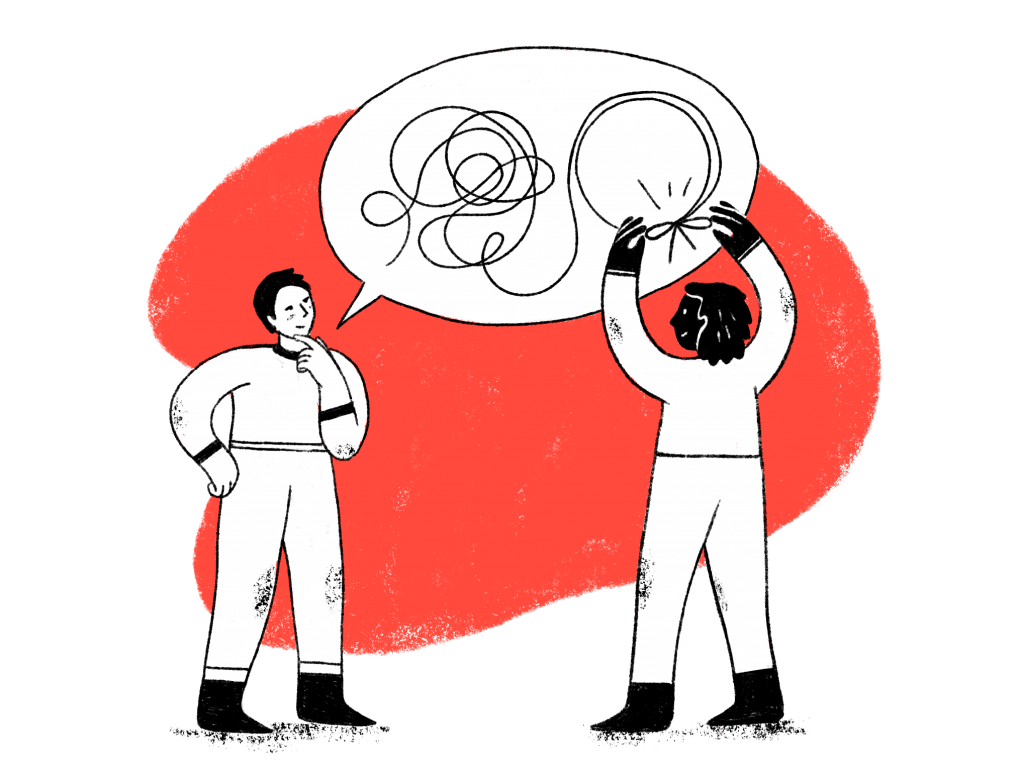
The person has the skills they need, but may hesitate when faced with a higher-stakes decision, a more visible responsibility, or an unfamiliar context. At this point, they need fewer instructions and more space to think things through.
The manager listens, consults, and resists the urge to take back control simply because they would have approached the situation differently. The goal is to strengthen the person’s judgment and ability to take action, while reinforcing their confidence in their own decisions.
When competence, confidence, and commitment are well established, the person can take full ownership of the assignment. The manager’s role shifts. Instead of focusing on how the work gets done, they focus on the expected outcome, decision-making boundaries, available resources, and useful check-ins.
Delegating doesn’t mean walking away. The person should still know what they can decide independently, when they need to consult, and how success will be evaluated. Support remains available, but without constant oversight.
The directive vs coaching leadership distinction is especially useful when someone is still learning. Both styles involve a relatively high level of direction, but they respond to different needs.
The directing style is most useful when the main issue is a lack of know-how. Someone using a software program for the first time, for example, may need a demonstration and clear, step-by-step instructions.
The coaching style is a better fit when the person understands the basics but is struggling to apply them, losing confidence, or becoming discouraged. The manager keeps the structure in place while asking questions, explaining decisions, and providing frequent feedback.
A useful question to ask is: “What’s keeping this person from moving forward: a lack of guidance, practice, confidence, or motivation?”
Align goals, build accountability and avoid micromanagement

Start by narrowing down the assignment. “Manage a project” is too broad to assess properly. Breaking it down into tasks such as building the schedule, coordinating the work, and flagging risks makes it easier to identify what kind of support is actually needed.
For example, instead of saying “manage the onboarding of a new employee,” define the task more precisely: “prepare and lead the new employee’s first-day welcome meeting.”
Look at the person’s previous experience, observed results, and ability to handle unexpected situations. Then add an open conversation about confidence and motivation. This assessment works best when it’s done with the person, not simply about them.
Decide what the person actually needs from you right now: clearer instructions, feedback, a sounding board, or more autonomy. You might ask: “To succeed with this assignment, do you need clearer direction, a chance to talk through your options, or more latitude?”
As someone becomes more capable and confident, the amount of direction they need should usually decrease. That said, needs can shift again if the task changes, a new challenge comes up, or the context becomes more complex. Short, regular check-ins make it easier to adapt your approach without slipping into micromanagement.
The first mistake: labelling someone as a beginner or as fully autonomous across their entire role. People can be highly independent in one area and need close guidance in another. What matters is the specific task.
The second mistake: confusing a directing style with excessive control. Providing clear guidance doesn’t mean dictating every move or shutting down discussion. Direction should help someone move forward, not make them dependent on the manager.
The third mistake: delegating without clarifying expectations. Autonomy can’t make up for unclear expectations. The desired outcome, decision-making boundaries, available resources, and points of contact still need to be clear.
Ultimately, situational leadership isn’t a foolproof formula. It’s a practical framework that works best when combined with conversation, observation, and sound judgment.
Situational leadership isn’t simply about choosing whether to direct, support, or delegate. It’s about creating the conditions people need to grow, use their judgment, and take on more responsibility over time.
It starts with aligning and empowering the team around clear expectations. Strategic thinking can then help managers distinguish between situations that call for a more hands-on presence and those where it makes more sense to step back. Delegating to engage means giving people that autonomy without losing sight of the direction you’re heading in. Coaching and constructive feedback can then support learning and help managers adjust their approach as people develop.
Learning to adapt your leadership takes flexibility, but it also takes intention. The goal isn’t to create a team that always depends on the manager. It’s to help people gradually build the confidence, skills, and autonomy they need to move forward with their manager — and sometimes without them.

Situational leadership FAQ
Leadership styles describe different ways of providing direction and support. Situational leadership is about choosing and adjusting your approach based on the task, the person, and the context.
Yes. Someone may be completely autonomous when preparing a recurring report but need coaching when leading their first strategic meeting. That’s why the best way to adapt leadership style is to look at the specific task rather than making a general judgment about the person.
No. When used at the right time, directing provides the clarity and structure someone needs to learn and move forward with confidence. It becomes problematic when it unnecessarily limits participation, reflection, or autonomy.
A team is ready when people understand the expected outcome, have the skills required to deliver it, make sound decisions, and know when to ask for input. Delegation should still make the available resources, decision-making boundaries, and follow-up expectations clear.

1. Hersey, P., Blanchard, K. H., & Johnson, D. E. (2008). Management of organizational behavior: Leading human resources (9th ed.). Pearson Prentice Hall.
2. Blanchard, K. (2019). A situational approach to effective leadership. Blanchard.
Blog
23 September 2026
8 min.

3 August 2026
8 min.

10 July 2026
6 min.
Nos ressources gratuites vous donneront un avant-goût de nos solutions et vous permettront de faire des premiers pas pour transformer votre organisation!
Pourquoi ça vaut la peine d’y réfléchir? Parce que la connaissance de son propre style et du style de l’autre permet d’être plus efficace dans ses relations interpersonnelles, à la maison comme au travail.
Alors, quel est votre style de communication?