Collaboration
12 February 2026
7 min.

Competence
11 March 2026
7 min.

Technical skills evolve quickly. But human skills remain essential for working effectively together. Communication, collaboration, leadership, managerial courage, handling workplace tensions… these soft skills are now central to team performance. So how do you choose a soft skills training program that will truly make a difference in your organization?
Organizations are investing more than ever in developing human skills. And for good reason: their impact on collaboration, engagement, and leadership is well documented.
According to LinkedIn Learning, 89% of hiring failures are linked to a lack of behavioural skills rather than technical skills. (1)
Yet not all soft skills training delivers the same results. Some sessions inspire participants for a few hours… but behaviours quickly slip back to old patterns. Old habits die hard.
So the real question becomes: how can you tell if a training program will actually lead to lasting change in your organization?
Effective soft skills training goes beyond a broad topic. It clearly defines the behaviours participants should develop. For example:
✓ Giving constructive feedback
✓ Asking questions that open dialogue
✓ Handling a difficult conversation
The more concrete the objectives are, the easier it becomes for participants to apply what they’ve learned.
Soft skills are supported by well-established research in psychology, behavioural science, leadership, and communication. The most credible programs draw from this knowledge base.
For example, Daniel Goleman’s work on emotional intelligence or Amy Edmondson’s research on psychological safety provide strong foundations for effective training. A solid scientific basis increases both the credibility and the impact of the learning experience.
Grow your soft skills at your own pace, based on your needs—whenever it works best for you
Adults learn best when they recognize themselves in the situations being discussed.
That’s why effective training includes:
✓ Concrete examples that reflect participants’ day-to-day work reality
✓ Realistic scenarios based on common workplace challenges
✓ Discussions grounded in practice—not just theory
This approach makes it easier to transfer learning directly into daily work situations. (2)
Whether online or in person, listening to a presentation for hours is rarely the most effective way to learn. The best training programs include exercises, experimentation, reflection, and—when done in groups—conversations between participants.
Active participation improves engagement and retention, making it more likely that participants will apply what they’ve learned.
Soft skills become truly valuable when people can apply them quickly in real situations.
Strong training programs therefore provide practical tools such as:
✓ Conversation frameworks that help move past discomfort
✓ Key questions that guide reflection
✓ Simple reference points that help people take action while staying aligned with their goals
These tools give participants something concrete to rely on when real situations arise.
100 practical tools, built to address common workplace situations
Human attention is limited. Cognitive science research shows that concentration drops when learning sessions are too long without interaction. (3)
Shorter learning sessions spaced over time often improve retention—whether the training is delivered online or through in-person workshops.
Theory helps participants understand concepts. Practice helps them integrate those concepts. Effective training combines both.
Participants learn why certain approaches work—and just as importantly, how to apply them in real conversations and situations. That balance is essential for turning knowledge into practical skills.
Emotions play an important role in learning. When participants feel curious, involved, or even entertained, learning sticks more easily.
Engaging training often includes:
✓ Dynamic discussions
✓ Inspiring stories
✓ A tone that feels human and accessible
Enjoyment may seem secondary—but it significantly strengthens learning outcomes.
Team-based training that shifts how you work—together
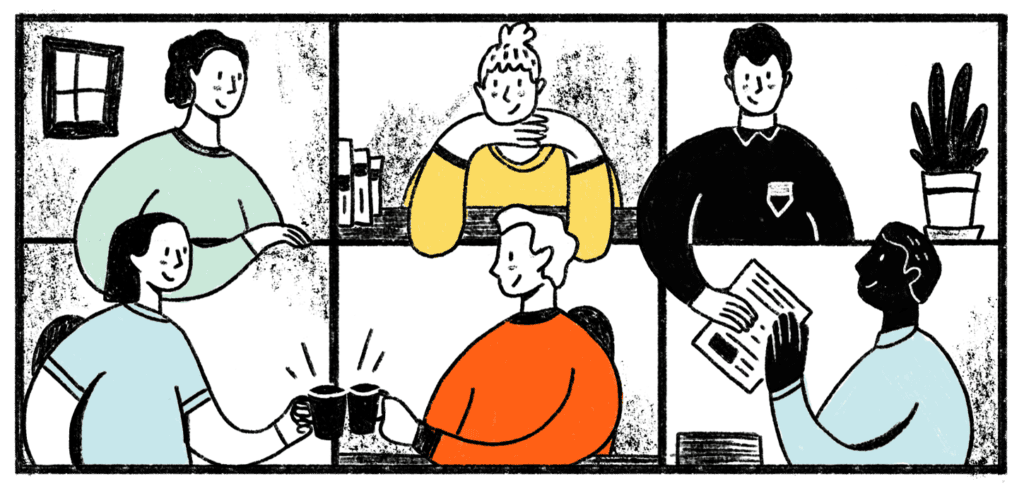
Soft skills training often touches on sensitive topics: feedback, conflict, leadership, managerial courage. For learning to happen, participants need to feel comfortable sharing experiences and perspectives.
That’s why effective training creates an environment of psychological safety—where people feel free to ask questions, share ideas, and explore different viewpoints without fear of judgment or negative consequences. (5)
Pedagogical expertise matters—but real-world experience matters just as much. Participants should feel they are leaving the training with practical tools, not just abstract ideas.
Effective facilitators adopt a coaching mindset and:
✓ Understand organizational realities
✓ Have worked with different types of teams
✓ Can adapt examples to different contexts
This credibility increases engagement and makes learning more relevant.
The most effective training programs don’t exist in isolation. They connect with the organization’s values, leadership practices, and the real challenges teams are facing.
Without that alignment, even good ideas can remain purely theoretical.

Every organization operates differently. Some prioritize in-person workshops, while others rely more heavily on online learning. The best training providers offer several formats: in-person, virtual, self-paced, and hybrid options.
This flexibility makes learning more accessible for distributed teams, busy schedules, and different learning preferences.
Learning interpersonal skills doesn’t happen in a single session. In fact, transferring learning into daily work is a well-known challenge in training.
According to the Center for Creative Leadership, less than 20% of learning from training programs is applied sustainably when there is no follow-up or reinforcement. (6)
Additional resources can help participants apply what they’ve learned, such as:
✓ Practical tools that guide conversations or behaviours at work
✓ Reminders or micro-content that reinforce learning over time
✓ A participant workbook that supports reflection and helps translate ideas into action
✓ Small challenges or actions to test in day-to-day work situations
These resources help learning stick over time.
Training can be serious without being rigid or overly formal. The most memorable learning experiences often combine rigour, simplicity, and authenticity. (At Boostalab, we like to say: effective, practical, and friendly!)
When participants feel comfortable, discussions become richer, learning sticks more deeply, and people are more motivated to apply what they’ve learned.
Flexible, engaging online learning—without the hassle of a traditional LMS
In the end, the most important question is simple: Do workplace interactions actually change after the training?
For example:
✓ More open conversations
✓ More constructive feedback
✓ Better collaboration
✓ More courage in difficult discussions
When a training program genuinely influences these behaviours, it becomes a powerful lever for the organization.
Soft skills are often described as the skills of the future. But developing them requires more than good intentions—the quality of the training experience matters enormously.
Effective training combines solid research, engaging learning methods, realistic situations, and practical tools that participants can apply right away.
When soft skills training is thoughtfully designed—with accessible formats, a climate of trust, and resources that support continued application—it can genuinely transform workplace interactions.
And that’s where organizations often see the most meaningful and lasting impact: in the quality of conversations, collaboration, and leadership in everyday work.
→ Group training: Explore our team workshops and learning journeys
→ Individual training: Discover our accessible, practical, people-first e-learning
→ Training for your LMS: Use our content on your own learning platform
→ Corporate subscription: Give your team full access to our online learning platform
Professionally designed content that works seamlessly with today’s most widely used LMS platforms
1. LinkedIn Learning. (2019). Global Talent Trends Report. LinkedIn.
2. Knowles, M. S., Holton, E. F., & Swanson, R. A. (2020). The Adult Learner: The Definitive Classic in Adult Education and Human Resource Development (9th ed.). Routledge.
3. Freeman, S. et al. (2014). Active learning increases student performance. Proceedings of the National Academy of Sciences.
4. Damasio, A. (1994). Descartes’ Error: Emotion, Reason, and the Human Brain. Putnam.
5. Edmondson, A. C. (2019). The Fearless Organization: Creating Psychological Safety in the Workplace for Learning, Innovation, and Growth. Wiley.
6. Beer, M., Finnström, M., & Schrader, D. (2016). Why Leadership Training Fails—and What to Do About It. Harvard Business Review.
Blog
12 February 2026
7 min.

10 February 2026
7 min.

17 January 2026
3 min.
Nos ressources gratuites vous donneront un avant-goût de nos solutions et vous permettront de faire des premiers pas pour transformer votre organisation!
Pourquoi ça vaut la peine d’y réfléchir? Parce que la connaissance de son propre style et du style de l’autre permet d’être plus efficace dans ses relations interpersonnelles, à la maison comme au travail.
Alors, quel est votre style de communication?