Professional communication
Fewer misunderstandings
A message can be crystal clear to the person writing it… but not nearly as clear to the person reading it.
At work, misunderstandings often happen when there’s a disconnect between what we mean, the words we choose, the context we provide, and what the other person actually takes away from our message. The result? Unnecessary questions, extra follow-ups, mismatched expectations, and sometimes tension that no one intended.
Our Professional communication | Fewer misunderstandings training helps participants build practical habits for planning, organizing, and reviewing their workplace communications. They’ll learn how to make their messages easier to understand, respond to, and act on, all while maintaining positive working relationships.
What makes professional communication effective?
Effective professional communication isn’t just about finding the right words. It starts before you even write an email, send a message, or start a conversation.
What am I trying to achieve? What’s the one thing the other person needs to understand? What do they already know? What do I need them to do? And what’s the best way to reach them?
These questions might seem straightforward. But when the answers aren’t clear, misunderstandings are more likely.
A message can be packed with information and still miss the point. A request might seem obvious to the person making it but leave the recipient guessing. A brief message can come across as harsh, while too much background information can bury what really matters.
Communicating effectively at work means making sure your message, expectations, and next steps are as clear as possible, leaving little room for confusion.
It’s also about keeping relationships in mind. When things get delicate, clarity doesn’t have to come at the expense of warmth or respect. Good professional communication means being direct without being dismissive, separating facts from assumptions, and knowing when it’s time to move beyond written messages.
Why invest in professional communication training?
So much of what we do at work comes down to communication: emails, instant messages, requests, instructions, follow-ups, decisions, feedback, clarifications.
When communication isn’t clear, the consequences can seem small: one more question, another round of messages, or a task that starts off on the wrong foot.
But those little hiccups add up.
People have to ask for missing information, double-check deadlines, figure out what’s expected, or clear up misunderstandings. Sometimes, unclear communication can even create tension or make a message sound more critical, urgent, or abrupt than intended.
Professional communication training helps teams avoid these frustrations by building habits they can put into practice right away.
Participants learn to get to the heart of their message, organize information in a way that makes sense, and clearly communicate requests, decisions, and next steps.
They also learn how to handle more delicate situations. Rather than avoiding a difficult message or softening it so much that the point gets lost, they’ll practise finding the right balance between clarity, assertiveness, and respect.
And with AI increasingly being used to draft and refine workplace messages, participants develop another important skill: knowing how to use AI to improve their communication without relying on it to make decisions, set intentions, or take professional responsibility.
The goal? Less confusion, fewer back-and-forth exchanges, and communication that actually makes everyone’s work easier.
In Quebec, this training may qualify as an eligible expense under the 1% Training Law. Some businesses may also be eligible for financial assistance through Services Québec.

Who is this training for?
This professional communication training is for anyone who needs to share information, make requests, explain decisions, or work with others as part of their job.
It’s especially valuable for teams that want to reduce misunderstandings and make everyday communication clearer and more effective.
It’s a great fit for people who need to:
- Write professional emails and messages regularly
- Make requests and give instructions that are easy to understand
- Clearly communicate decisions and next steps
- Cut down on back-and-forth caused by missing information
- Adapt their message to different people and situations
- Respond to unclear or tense messages
- Balance assertiveness with respect
- Recognize when it’s better to have a conversation than keep exchanging messages
- Use AI to improve the quality of their communication
- Exercise professional judgment when reviewing AI-assisted messages
These challenges come up in almost every role and department, making the training relevant for employees, managers, and professionals alike.
Our professional communication training solutions
Build practical communication habits to make messages clearer, prevent misunderstandings, and help people move forward with confidence.

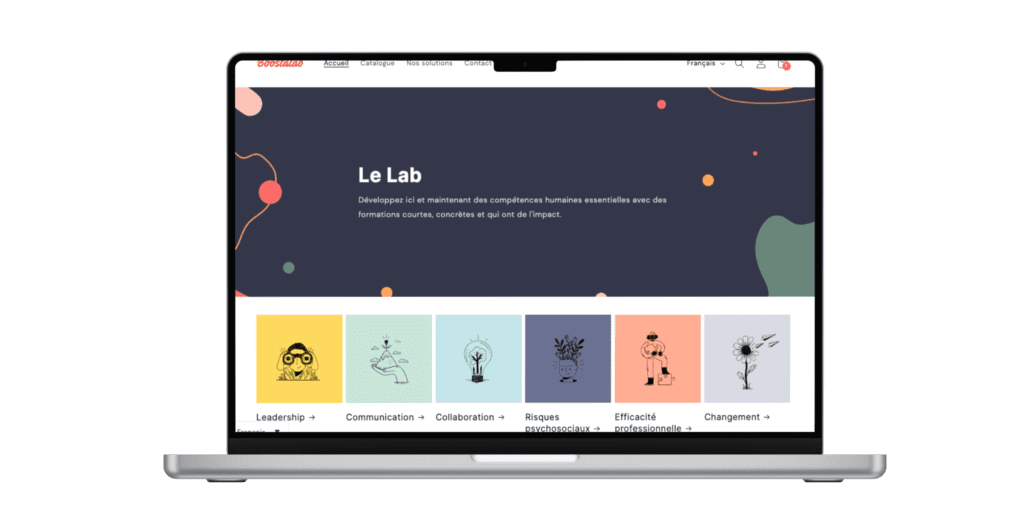
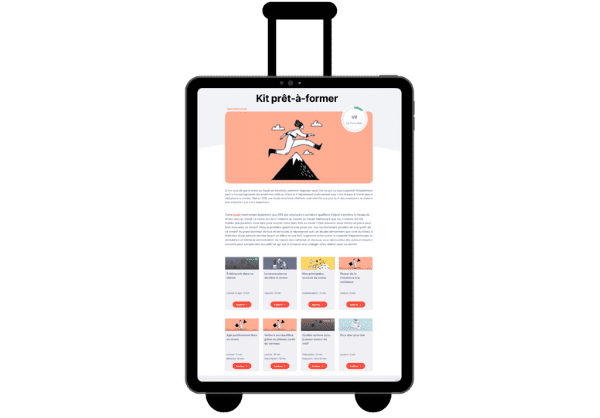
Explore our catalogue of communication training courses on Le Lab
Communication collection
Why is it important to communicate more clearly at work?
Because what’s perfectly clear in our heads isn’t always clear to someone else. Effective communication means putting the most important information front and centre, making expectations clear, and providing just enough context to help people understand what they need to do. It also means knowing when to stop typing and start talking, because sometimes a quick conversation is the simplest, fastest, and most effective way forward.
Learning outcomes

Assess a communication situation to clarify your intent, identify the key message, and understand what the recipient needs.

Organize information so messages are clear, easy to follow, and easy to act on.

Make requests, deadlines, and next steps explicit to avoid unnecessary back-and-forth.

Communicate clearly and respectfully, even in sensitive or tense situations.

Choose the right communication channel for the situation and recognize when a conversation would work better than a written exchange.

Use AI to improve workplace communication while maintaining sound judgment and taking responsibility for the final message.
FAQ – Professional communication
What is professional communication?
Professional communication is how we share information, make requests, communicate decisions, and set expectations at work in a way that’s clear, appropriate, and suited to the people involved.
When done well, it helps people understand what’s being communicated, respond appropriately, and take action, all while maintaining positive working relationships.
Why take professional communication training?
Professional communication training helps people build practical habits to make their messages clearer, reduce misunderstandings, and avoid unnecessary back-and-forth.
It also teaches participants how to organize their thoughts, communicate requests more clearly, and navigate delicate situations with confidence and respect.
Who can benefit from professional communication training?
Anyone who communicates with colleagues, managers, partners, or other stakeholders as part of their job can benefit from this training.
Since communication is part of almost every role, it’s a valuable learning opportunity for employees, managers, and professionals across an organization.
Anyone who communicates with colleagues, managers, partners, or other stakeholders as part of their job can benefit from this training.
Since communication is part of almost every role, it’s a valuable learning opportunity for employees, managers, and professionals across an organization.
How can you improve your professional communication?
Start by getting clear on what you want to achieve before you write or speak. What does the other person need to know, understand, or do after receiving your message?
Then, organize your message so the key information is easy to find. Include the context the person needs and make sure any important actions, deadlines, or next steps are clearly stated.
How do you write a clear professional message?
A clear professional message gets to the point early and presents supporting details in a logical order.
The recipient should quickly understand why they’re receiving the message, what matters most, and what’s expected of them, without having to dig through paragraphs of information to figure it out.
How can you prevent misunderstandings at work?
One of the best ways to prevent misunderstandings is to spell out what might otherwise be left unsaid: your intent, the context, your request, who’s responsible for what, the deadline, and the next steps.
It’s also important to think about the recipient’s perspective. Don’t assume they have the same information or background knowledge you do.
How can you be clear without coming across as abrupt?
Being clear doesn’t mean being cold or harsh.
You can be direct and respectful at the same time. Focus on the facts rather than assumptions, be specific about what you’re asking for, and avoid unnecessary blame or accusations.
Remember that how a message comes across depends not only on what you say, but also on your tone, the context, and your relationship with the other person.
How should you respond to a tense message at work?
Start by separating the facts from the requests and interpretations in the message.
Then, focus on clearing up the situation, addressing what needs a response, and suggesting a practical next step rather than matching the other person’s frustration.
If the written exchange starts creating more confusion or tension, it might be time to pick up the phone or have a conversation instead.
When is it better to talk rather than write?
Sometimes, a conversation is simply the better option. This is especially true when the topic is sensitive, when messages keep going back and forth without resolving anything, or when the tone of a written message could easily be misinterpreted.
Choosing the right communication channel means considering not just what you need to say, but also how complex the situation is and the relationship between the people involved.
How can AI help improve a professional email or message?
AI can help you simplify wording, spot potential misunderstandings, improve the flow of a message, or identify important information you might have left out.
To get the most useful results, give AI some context: explain what you’re trying to communicate, who the message is for, and what outcome you’re looking for.
Then, review what AI suggests. It can help with the writing, but you’re still responsible for making sure the final message is accurate, appropriate, and aligned with your intent and tone.
What precautions should you take when using AI to write professional messages?
First, be mindful of confidentiality. Avoid sharing sensitive or confidential information if your organization’s policies or the AI tool you’re using don’t allow it.
Always review AI-generated content before sending it. Make sure it reflects what you actually mean, and adjust any wording that changes the intended message or tone.
AI can be a helpful writing partner, but it doesn’t replace your professional judgment or responsibility.
Is your training course eligible under Quebec's 1% Training Law?
Yes, our training programs may count as eligible training expenses under Quebec’s 1% Training Law, depending on your organization’s circumstances. Some businesses may also be eligible for financial assistance through Services Québec.
Yes, our training programs may count as eligible training expenses under Quebec’s 1% Training Law, depending on your organization’s circumstances. Some businesses may also be eligible for financial assistance through Services Québec.