Decision-making
Making decisions when nothing is perfect
The toughest decisions rarely involve choosing between an obviously right option and an obviously wrong one. More often, they come with incomplete information, competing values, risks to weigh, and consequences no matter which way you go.
Decision-making | Making decisions when nothing is perfect helps managers and professionals develop a structured approach to navigating these grey areas. With the DECIDER compass, participants learn to better understand the situation, broaden their perspective, choose the right decision-making approach, and make decisions with greater rigour.
The goal isn’t to eliminate uncertainty. It’s to learn how to make better decisions even when no option is perfect, then communicate those decisions clearly, stand behind them, and monitor their outcomes.

What makes for good decision-making?
Good decision-making isn’t simply about choosing quickly between different options. It starts with understanding the situation before jumping to a solution.
Some decisions are fairly straightforward. Others involve multiple factors, incomplete information, unpredictable risks, or significant consequences for the people affected. That’s why the same decision-making approach won’t work in every situation.
Making sound decisions means knowing how to assess the situation, identify constraints, recognize competing values, and evaluate risks and the human impact.
It also means resisting some common habits: deciding too quickly just to get past the discomfort, consulting people without a clear purpose, reducing a problem to two options when others might exist, or trying to find a solution that will please everyone.
Effective decision-making isn’t necessarily about certainty or consensus.
It’s about reaching a decision that’s clear, grounded in the situation, and solid enough to explain and stand behind.

Why invest in decision-making training?
Making decisions is part of everyday work. But the higher the stakes, the harder it can be to find a clear answer.
Managers often have to move forward with incomplete information, balance competing priorities, work within real constraints, and anticipate consequences they can’t fully predict.
In these situations, the challenge isn’t just to make a decision, it’s knowing how to decide when nothing is completely clear.
Without a structured approach, it’s easy to fall into common traps: putting off decisions while waiting for more certainty, relying on outdated criteria, getting stuck in false dilemmas, or consulting too many people without clarifying who has the final say.
Decision-making training provides practical guidance on when to slow down and think things through, without making the process unnecessarily complicated.
It also helps strengthen judgment. Participants learn to recognize blind spots, consider different perspectives, and choose an approach that fits the situation instead of relying on the same decision-making habits every time.
And decision-making doesn’t end once a choice has been made. Difficult decisions need to be communicated clearly, especially when they affect people. Their outcomes also need to be monitored so you can understand what’s happening and make adjustments when needed.
Developing these skills helps people make decisions that are more rigorous, easier to defend, and easier to stand behind, even when uncertainty remains.
In Quebec, this training may qualify as an eligible training expense under the 1% Training Law. Some businesses may also qualify for financial assistance through Services Québec.

Who is this training for?
This decision-making training is designed for managers, professionals, and people in positions of responsibility who regularly need to make or recommend decisions in complex or uncertain situations.
It’s especially relevant when several factors need to be weighed and no single option stands out as the obvious choice.
It can help people who need to:
- Make decisions with incomplete information
- Balance competing priorities and constraints
- Evaluate different types of risks
- Consider the human impact of their decisions
- Navigate competing values or interests
- Make decisions in new or unfamiliar situations
- Determine when to consult others and who to involve
- Communicate difficult decisions clearly and respectfully
- Stand behind decisions that won’t necessarily have everyone’s support
- Monitor outcomes and recognize when adjustments are needed
This training is particularly valuable for managers looking to strengthen their judgment and make sound decisions without waiting until every variable is fully understood.

Our decision-making training solutions
Help your managers and teams make more rigorous decisions, even when circumstances are complex, uncertain, or less than ideal.

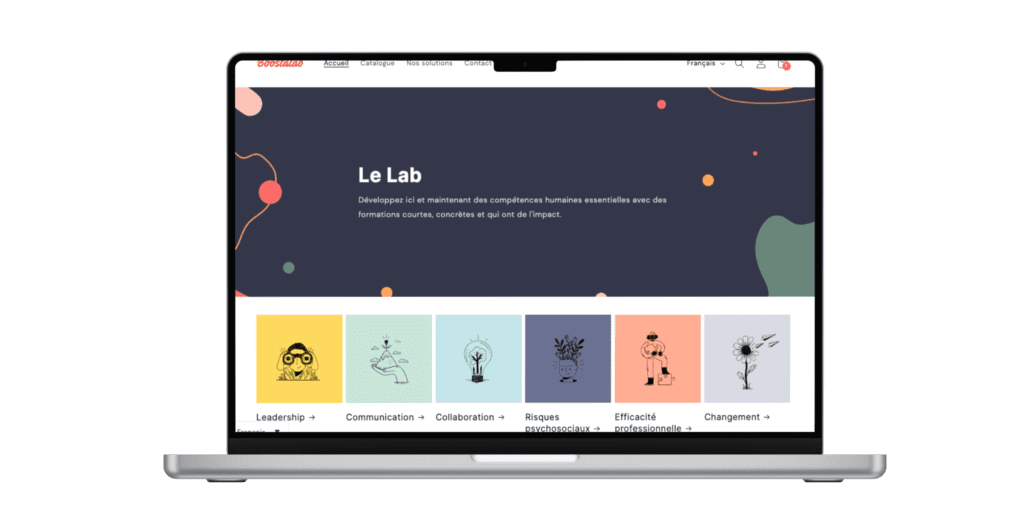

Explore our leadership training catalogue on Le Lab
Leadership collection
Why learn to make better decisions in uncertain situations?
Because the decisions that matter most are often the ones without a perfect answer. Trying to eliminate uncertainty altogether can slow things down without necessarily leading to better decisions. But moving too quickly can cause you to overlook important risks, impacts, or possibilities. Strengthening your decision-making skills means learning when to dig deeper, when to consult others, when to experiment, and when it’s time to make a decision and stand behind it. The goal isn’t to guarantee that every decision will turn out as expected. It’s being able to say: Here’s what we knew. Here are the criteria we considered. Here’s why we chose this approach. And here’s what we’ll be monitoring from now on.
Learning outcomes

Assess the situation before deciding by identifying the context, the people affected, the constraints, the risks, and the impacts that should inform the decision

Broaden your perspective and reduce blind spots by recognizing biases, questioning criteria, and challenging false dilemmas

Choose the right decision-making approach by adapting your approach to the actual situation instead of relying of reflexes

Make decisions that are imperfect but clear and defensible, despite discomfort

Communicate and stand behind difficult decisions by acknowledging their impact and clarifying what can still be adjusted

Learn from the outcomes by monitoring expected and unexpected consequences
FAQ – Decision-making
What makes for good decision-making?
Good decision-making means understanding a situation well enough to choose an approach that fits the context, the criteria that matter, the risks, and the potential impacts. It doesn’t guarantee a perfect outcome, but it helps you make decisions that are clear, well-reasoned, and defensible.
Good decision-making means understanding a situation well enough to choose an approach that fits the context, the criteria that matter, the risks, and the potential impacts. It doesn’t guarantee a perfect outcome, but it helps you make decisions that are clear, well-reasoned, and defensible.
Why take decision-making training?
Decision-making training helps you develop practical methods and habits for analyzing complex situations, reducing blind spots, and choosing an approach that fits the circumstances. It also helps you communicate difficult decisions and take responsibility for them.
Decision-making training helps you develop practical methods and habits for analyzing complex situations, reducing blind spots, and choosing an approach that fits the circumstances. It also helps you communicate difficult decisions and take responsibility for them.
Who is this decision-making training for?
It’s primarily designed for managers, professionals, and people in positions of responsibility who regularly make, recommend, or communicate decisions involving uncertainty, risks, constraints, or significant human impacts.
It’s primarily designed for managers, professionals, and people in positions of responsibility who regularly make, recommend, or communicate decisions involving uncertainty, risks, constraints, or significant human impacts.
How can you make a difficult decision when no option is perfect?
Start by identifying what makes the decision difficult: missing information, constraints, risks, competing values, impacts on people, or uncertainty about the outcomes. A structured approach can then help you examine these factors, explore more possibilities, and determine which criteria should guide your choice.
This training introduces the DECIDER compass to help structure that process.
How can you make decisions with incomplete information?
You won’t always have all the information you need before making a decision. The key is to identify what’s essential, what remains uncertain, and how much risk you’re prepared to accept.
Depending on the situation, you might need to dig deeper, consult the right people, test an assumption, or make a decision while identifying what to monitor afterward.
How can you reduce bias in decision-making?
You can’t eliminate bias completely, but you can reduce its influence by making your decision-making criteria clear, actively seeking different perspectives, and questioning whether the way a problem is framed is limiting your options.
Challenging a false dilemma or an outdated criterion can reveal possibilities you might otherwise have missed.
When should you consult your team before making a decision?
Consultation is useful when it brings information, expertise, or perspectives that can improve a decision. But consulting people doesn’t automatically mean everyone gets an equal say in the final choice.
Before consulting, clarify your goal. Are you looking for information, ideas, validation, a recommendation, or a shared decision? Knowing the difference helps you choose the right decision-making approach and set clear expectations.
How should you communicate a difficult decision?
Communicate the decision directly. Explain what was decided and the main criteria behind it, while acknowledging the consequences for the people affected.
Acknowledging those impacts doesn’t mean reopening the decision right away. It means taking them seriously and clarifying what’s been decided, what can still change, and how the outcomes will be monitored.
How can you stand behind a decision that doesn't have everyone's support?
A decision can be legitimate even when not everyone agrees with it. What matters is being able to explain the reasoning behind your choice, acknowledge disagreements and impacts, and stay consistent with the criteria that guided the decision.
Standing behind a decision also means taking responsibility for monitoring its outcomes and making adjustments when new information calls for them.
Should you always seek consensus to make a good decision?
No. Consensus can be valuable in some situations, but it isn’t always necessary or practical. Some decisions call for consultation, others require specific expertise, experimentation, or a decision made by the person responsible.
A sound approach helps you choose how the decision should be made, rather than automatically relying on the same method every time.
How do you know when to revisit a decision?
A decision doesn’t need to be reopened every time someone feels uncomfortable with it. Instead, identify in advance which outcomes you’ll monitor and what signals might call for an adjustment.
Follow-up helps you tell the difference between a normal adjustment period and genuine signs that your initial assumptions or parts of the decision need to be revisited.
Does your training qualify under Quebec's 1% Training Law?
Our training may count toward eligible training expenses under Quebec’s 1% Training Law, depending on your organization’s situation. Some businesses may also qualify for financial assistance through Services Québec.
Our training may count toward eligible training expenses under Quebec’s 1% Training Law, depending on your organization’s situation. Some businesses may also qualify for financial assistance through Services Québec.